Stealing From the Masters (And Why That's Actually the Point)
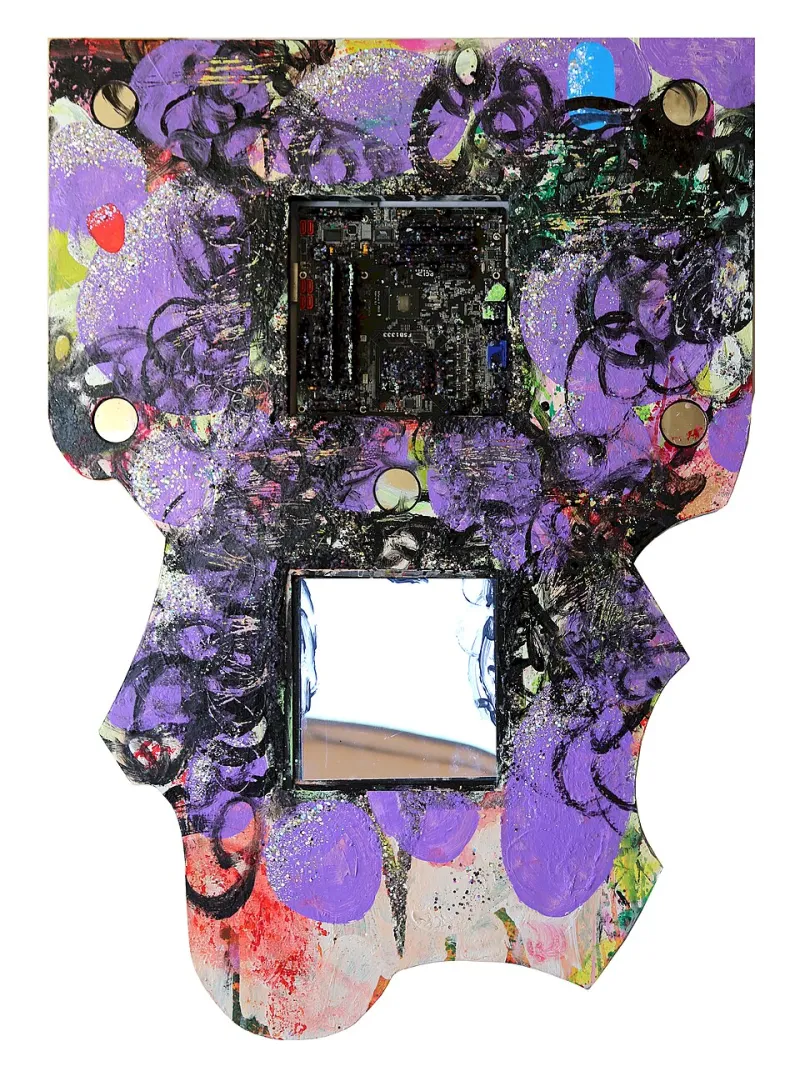
Photo: Cobrahman, CC BY-SA 4.0, via Wikimedia Commons
There's a quote often misattributed to Picasso — "Good artists borrow, great artists steal" — that gets thrown around so casually it's practically lost its edge. But spend five minutes looking at what's happening in contemporary galleries, art fairs, and Instagram feeds right now, and that idea suddenly feels less like a cliché and more like a manifesto.
Something is happening in the art world. A whole generation of artists is turning back to the canon — not with reverence, exactly, but with something more interesting: intention. They're pulling apart Vermeer, Velázquez, and the Harlem Renaissance the way a mechanic pulls apart an engine, figuring out how it works before deciding what to rebuild.
This isn't disrespect. It's fluency.
The Remix as a Critical Tool
Let's be real: art history has always been a conversation. Every movement was, at least in part, a reaction to the one before it. The Impressionists pushed back against academic realism. Abstract Expressionism blew up the European tradition. Postmodernism made the rupture itself the point.
What's different now is the speed and accessibility of that conversation. A 22-year-old artist in Atlanta or Albuquerque can spend a Sunday afternoon deep-diving into the complete works of Gustave Courbet on their laptop, then spend Monday morning responding to it in their own studio. The archive is open. The reference library is infinite.
And contemporary artists are using that access to ask a specific, urgent question: What does this old image mean when I put it in a new body, a new context, a new century?
Kehinde Wiley made that question impossible to ignore. His large-scale portraits — Black men and women posed with the same grandeur as European Old Masters, surrounded by ornate botanical patterns — didn't just borrow the visual language of Titian or Van Dyck. They used it as a precision instrument, exposing exactly whose stories those compositions were built to tell, and deliberately expanding that frame. When Wiley painted Barack Obama's official presidential portrait, the conversation between past and present became literally historic.
Mickalene Thomas and the Art of Gorgeous Disruption
If Wiley's work is about reclaiming monumental space, Mickalene Thomas's practice is about reclaiming the gaze itself. Thomas's rhinestone-encrusted portraits of Black women draw directly from art historical archetypes — the reclining nude, the odalisque, the domestic interior — and transforms them into something that shimmers with self-possession.
Her 2012 work Le déjeuner sur l'herbe: Les trois femmes noires is an explicit riff on Manet's scandalous 1863 painting, which itself was a riff on Renaissance compositions by Raphael and Titian. Thomas didn't just update the figures. She changed what it means for those figures to hold our attention. Where Manet's original made viewers uncomfortable by confronting them with an unapologetic female gaze, Thomas's version multiplies that discomfort and transforms it into joy.
That's the thing about reimagining a classic: you're not just commenting on the original. You're commenting on every viewer who ever stood in front of it.
Why This Trend Reflects a New Kind of Creative Confidence
It would be easy to read this movement as nostalgic — as artists retreating into the past because the present feels overwhelming. But that reading misses the point entirely.
Engaging seriously with art history requires a specific kind of confidence. You have to know the original well enough to know where to push. You have to trust your own perspective enough to believe it adds something. And you have to be willing to stand next to Vermeer or Goya or Romare Bearden without flinching.
In the digital age, that confidence looks different than it used to. Artists growing up online have been swimming in images their whole lives — memes, screenshots, Pinterest boards, museum collection databases. The visual world isn't a curated sequence of influences; it's a simultaneous flood. The artists who thrive in that environment aren't the ones who resist the flood. They're the ones who learn to navigate it with purpose.
That's exactly what artists like Jordan Casteel, Amy Sherald, and Titus Kaphar are doing. Kaphar's torn and folded canvases literally rearrange art historical imagery — pulling figures out of backgrounds, obscuring certain faces, forcing viewers to see what traditional Western painting left out. His ongoing engagement with the canon isn't reverence. It's excavation.
What This Means for Your Own Practice
You don't have to be a painter working in the tradition of European portraiture to take something from this conversation. The underlying principle applies across every creative discipline: understanding why something became canonical gives you the tools to decide what to keep, what to discard, and what to flip entirely.
Start by asking what the original was for. Who made it, for whom, and under what conditions? What assumptions does it carry? What does it leave out? Then ask yourself what happens when you change one of those variables.
Sometimes the answer is a whole new work. Sometimes it's just a deeper understanding of your own instincts. Either way, you're not imitating. You're thinking.
The Long Game
Here's the quiet truth underneath all of this: the artists doing the most interesting work with art history aren't the ones who are obsessed with the past. They're the ones who are obsessed with the present — and who've figured out that the past is one of the most powerful lenses available for examining it.
The classics aren't a museum to wander through politely. They're raw material. They're a set of questions that never got finished.
The most exciting contemporary artists are just bold enough to pick up where someone else left off — and honest enough to admit it.