Empty on Purpose: How Contemporary Artists Are Turning Void Into the Loudest Voice in the Room
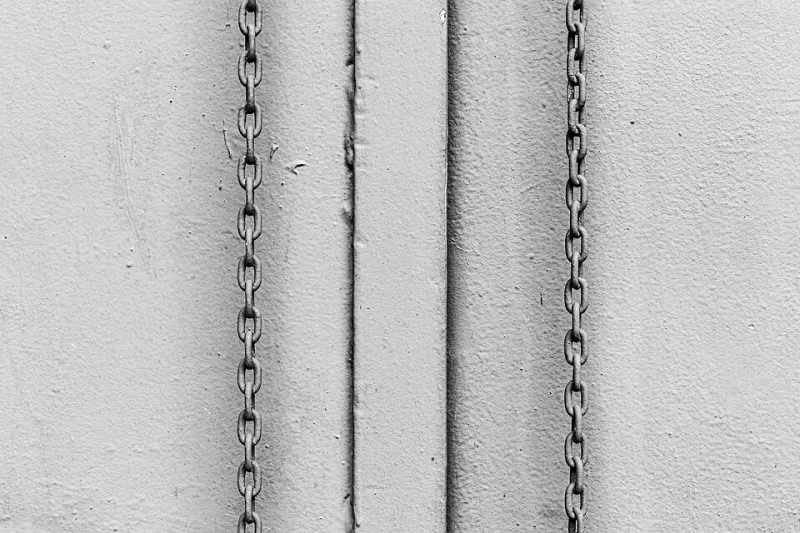
Photo: Dietmar Rabich, CC BY-SA 4.0, via Wikimedia Commons
Scroll through your Instagram feed for thirty seconds and count the silence. Chances are, you won't find any. Every pixel is accounted for — filters stacked on filters, text overlaid on images, carousels packed edge to edge with information demanding your attention. Now walk into a contemporary gallery where a single brushstroke sits dead center on a six-foot canvas, surrounded by nothing. The effect is almost violent in its quietness.
That contrast isn't accidental. For a growing number of artists working today, the emptiness is the work.
The Shift From Accident to Intention
For most of Western art history, blank space was something to be conquered. The Baroque masters filled every corner with cherubs and clouds. The Romantics packed their canvases with drama. Even the Impressionists, loose and gestural as they were, kept things relatively full. The idea of leaving space deliberately — not because you ran out of ideas, but because the space itself was the idea — felt radical when minimalists like Agnes Martin started doing it in the mid-20th century. It still feels radical now, just for different reasons.
Back then, negative space was a philosophical statement about form and reduction. Today, it's also a cultural one. Emerging artists are working in a world where attention is currency and oversaturation is the default. Choosing restraint in that environment isn't just an aesthetic decision — it's almost an act of protest.
Take artists like Brooklyn-based painter Sela Avraham, who has been gaining traction in the New York gallery scene for canvases where a single gestural mark floats in acres of unpainted linen. She's described her process as "giving the viewer permission to breathe," a phrase that sounds almost therapeutic — and maybe it is. When your daily visual diet is algorithmically curated to keep your eyes moving, stillness becomes genuinely disorienting. And disorientation, in art, tends to mean something.
Museums Are Making Room for Nothing
The institutional art world has noticed the shift. Recent exhibitions at spaces like the Hammer Museum in Los Angeles and the New Museum in New York have featured programming that explicitly foregrounds the role of void in contemporary practice. Curators are increasingly framing negative space not as a formal device but as an emotional and political one — a way of acknowledging what isn't said, what's been erased, what's been left out of the dominant narrative.
One particularly striking example is the growing body of work by artists addressing historical trauma through absence. Instead of depicting violence or loss directly, these artists leave gaps — literal holes in canvases, empty pedestals where sculptures might have stood, walls where text stops mid-sentence. The blank space becomes a stand-in for the unspeakable. It asks viewers to sit with discomfort rather than offering them the relief of a complete image.
This approach has a psychological dimension that's hard to overstate. Research in visual perception has long established that the human brain is wired to complete incomplete images — a phenomenon called the Gestalt principle of closure. When an artist deliberately leaves that closure unavailable, it creates a low-level cognitive tension that keeps the viewer engaged in a fundamentally different way than a fully resolved composition does. You don't just look at the work. You work at it.
The Social Media Effect
It would be too easy to frame this as simply a backlash against digital culture, and the reality is more nuanced than that. Social media didn't create visual oversaturation — it accelerated a tendency that was already there in advertising, in 24-hour news, in the general velocity of American visual culture. But it did make that saturation inescapable in a way that previous generations didn't experience.
The result is a kind of perceptual exhaustion that a lot of people feel but struggle to name. You've probably experienced it — that glazed feeling after scrolling too long, where everything starts to look the same because everything is fighting equally hard for your attention. In that context, a painting that offers you nothing to consume — just space, just air, just the invitation to be still — hits differently.
Some artists are explicitly responding to this. Chicago-based multimedia artist Dara Okonkwo has talked in interviews about designing her installations to be "algorithmically indigestible" — deliberately difficult to photograph in a way that translates well to a phone screen, so that the work essentially forces you to be present with it in person. The negative space in her pieces isn't just compositional; it's functional. It resists the flattening that happens when art gets compressed into a JPEG.
What the Void Is Actually Saying
So what does all this emptiness actually mean? That's the question that makes negative space so rich as a subject, because the answer is genuinely different depending on the work and the viewer. Absence is inherently interpretive. A blank canvas can be a meditation on potential, or a document of loss, or a refusal, or an invitation, or all of those things at once.
What the best space-forward work shares is a commitment to honesty — a refusal to fill in the gaps just because gaps make people uncomfortable. In a culture that defaults to more, choosing less is a kind of truth-telling. It admits that some things can't be shown directly. It respects the viewer enough to let them bring something of their own to the encounter.
That might be why negative space feels so contemporary right now, even though it's a concept with deep roots in everything from Japanese ink painting to mid-century graphic design. The form isn't new. But the urgency behind it is. When every other surface is competing for your eyes, a canvas that simply makes room for you feels like a genuinely generous act.
And in art, generosity has always been its own kind of statement.