No Artist Is an Island: The Hidden Communities Behind Every 'Solo' Creative
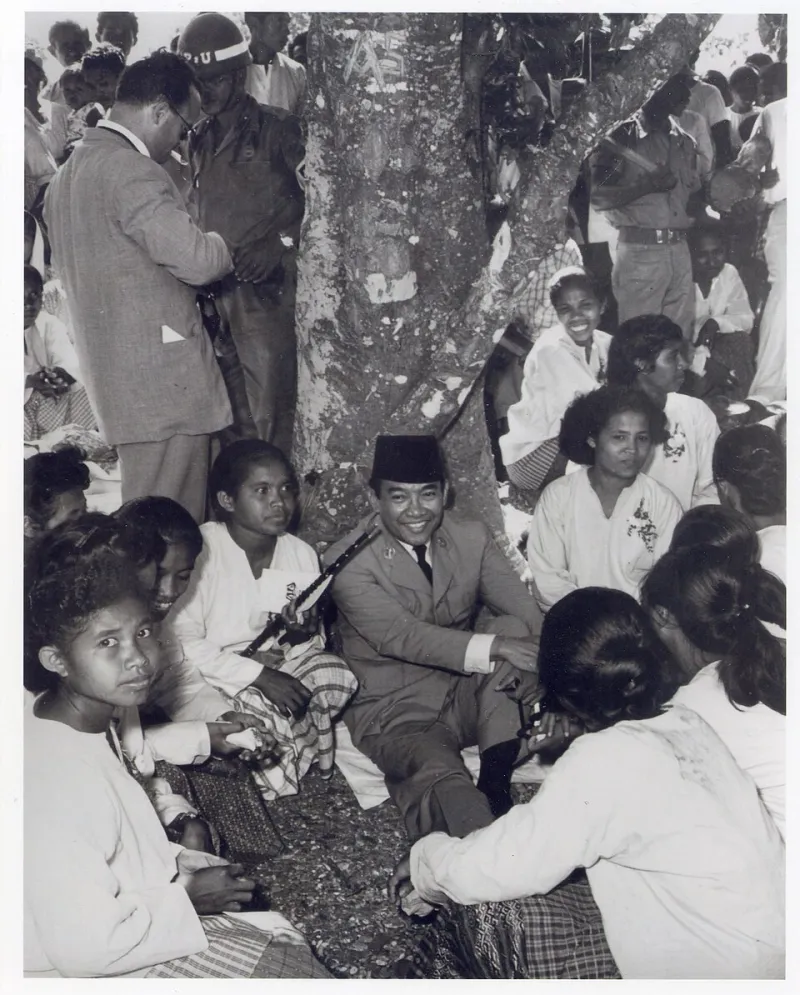
Photo: Unknown photographer, CC BY-SA 4.0, via Wikimedia Commons
There's a story we love to tell about artists. It goes something like this: a singular, misunderstood visionary holes up in a studio somewhere — Brooklyn loft, New Mexico desert, doesn't matter — and eventually emerges with work that changes everything. Alone. Uninfluenced. Pure.
It's a great story. It's also mostly fiction.
The more you talk to working artists, the more that myth dissolves. What you find underneath it is something messier, warmer, and honestly way more interesting: a dense web of relationships, borrowed ideas, late-night text threads, and quiet mentorships that quietly power what the world eventually calls a "solo" practice.
The Myth We Can't Seem to Quit
American creative culture has a deep romance with the lone genius. From the abstract expressionists of the mid-20th century — who, ironically, all hung out at the same Cedar Tavern in Manhattan — to the garage-startup mythology of Silicon Valley, we keep reaching for the same narrative. One person. One vision. One breakthrough.
But art historians have been quietly dismantling this for decades. We know now that Frida Kahlo's work was deeply shaped by her correspondence with surrealists across two continents. We know that Jean-Michel Basquiat's raw energy was nurtured by Andy Warhol's mentorship, even if their dynamic was complicated. We know that Georgia O'Keeffe's New Mexico isolation was anything but — she maintained a fierce intellectual correspondence with writers, critics, and fellow artists until her final years.
The solo genius was always a partial truth at best.
What Contemporary Artists Are Actually Doing
Talk to emerging artists working today and a different picture comes into focus fast. Many of them are deliberate and almost strategic about the communities they build around their practice — even when that practice looks solitary from the outside.
Take illustrators and visual artists working in the digital space. Platforms like Instagram and Behance get dismissed as vanity tools, but for a lot of creators, they function as something closer to a working studio environment. You post a sketch, three people DM you with references you'd never have found on your own, someone introduces you to a colorist in Portland whose palette completely shifts how you think about your next series. That's not networking in the LinkedIn sense. That's creative osmosis.
Sculptors and installation artists often describe their process in similar terms. The physical work might happen solo, but the conceptual scaffolding — the ideas that actually hold the piece together — gets stress-tested constantly through conversation. A coffee chat with a curator friend. A critique session with two painters whose medium has nothing to do with yours. A podcast episode that sends you back to your sketchbook at midnight.
None of these collaborators show up in the artist's statement. But pull on any thread and they're there.
The Tension Is Real — And That's the Point
Here's where it gets genuinely complicated. The desire for a singular artistic voice is not just ego. It's legitimate. There's a real creative danger in letting your work become a committee decision, in smoothing out the weird edges that make your perspective yours by running everything through too many filters.
The artists who navigate this well seem to have developed an almost intuitive sense of when to open the door and when to close it. They're voracious consumers of other people's ideas during the early, generative phase of a project — reading widely, having conversations, letting influences collide. Then, at a certain point, they go quiet. The community gets shut out while the actual making happens. What emerges is singular, but it was fed by many.
One emerging textile artist described it this way: "I think of my community like a compost pile. Everything goes in — conversations, critiques, stuff I read, stuff people send me. It breaks down. And then what grows out of it is mine."
That's not a contradiction. That's a process.
Building Your Invisible Network
If you're a creator who's been operating with the lone-genius model — consciously or not — there are a few ways contemporary artists are rethinking what community looks like without compromising independence.
Find your creative friction. The most useful people in your network aren't the ones who love everything you do. They're the ones who push back thoughtfully, who ask questions you haven't asked yourself. Seek those people out specifically.
Borrow across disciplines. Some of the most generative conversations happen when you stop talking only to people in your medium. If you're a painter, spend time with architects. If you're a graphic designer, hang out with musicians. Cross-pollination is where the interesting stuff tends to happen.
Protect the making time. Community feeds the work. It doesn't replace it. The artists who blur this line — who spend more time talking about making than actually making — often end up creatively stalled. Be intentional about when you're in intake mode and when you're in output mode.
Let the credits be invisible. There's no obligation to publicly document every influence, every conversation, every person who shaped a piece. What matters is that you know. Gratitude doesn't require a footnote.
Redefining What 'Solo' Means
Maybe the real shift happening in contemporary art culture is a quieter one. Less about dismantling the solo practice as a concept and more about expanding what it actually includes.
A solo practice doesn't mean you made something in a vacuum. It means the final creative vision, the voice that holds the work together, is yours. Everything that fed it — the people, the conversations, the borrowed references, the late-night rabbit holes — those are just the conditions you created for the work to exist.
No artist is an island. But that doesn't mean every artist is the same continent.
The most honest thing the contemporary art world could probably do is stop pretending otherwise — and start celebrating the invisible ecosystems that make singular work possible in the first place.