Pull Back the Curtain or Keep It Closed? The Real Cost of Sharing Your Creative Process
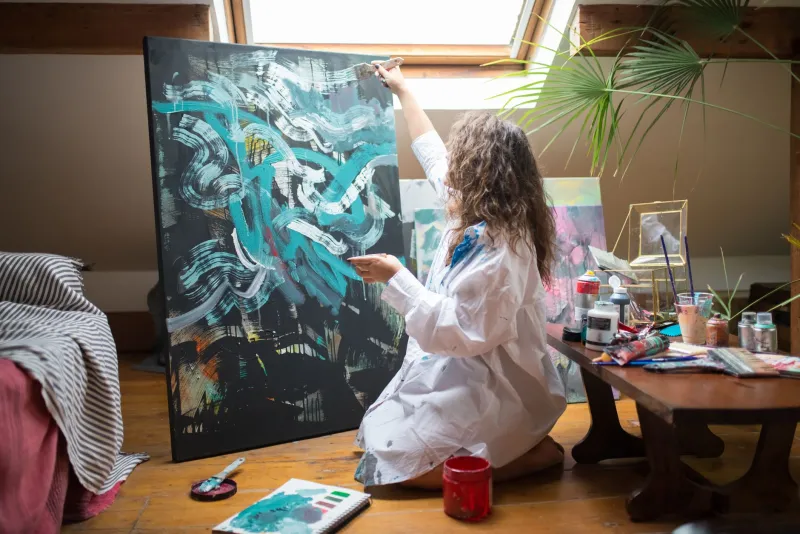
There's a particular kind of magic that happens when you stand in front of a finished painting and have absolutely no idea how it got there. The surface holds its secrets. The artist isn't in the room explaining themselves. You're just alone with the thing, and it does whatever it does to you. That experience — unmediated, a little mysterious — is increasingly rare. And honestly? We might be the ones who killed it.
Somewhere between the rise of Instagram Stories, TikTok studio vlogs, and the relentless creator-economy pressure to "build in public," artists found themselves in a strange new contract with their audiences. Show us how you do it. Show us the messy desk. Show us the failed sketches. Show us you. And plenty of artists obliged — because visibility means relevance, and relevance means survival.
But here's the question nobody's asking loudly enough: what exactly do we lose when the curtain comes all the way down?
The Mystique Is Doing Real Work
Art historians have long understood that part of what gives a great work its staying power is its resistance to full explanation. When you look at a Rothko and feel something you can't quite name, the not-naming is part of the point. The emotion lives in the gap between what you see and what you understand. Demystify the process too thoroughly, and you risk collapsing that gap entirely.
This isn't just romantic nostalgia for some pre-internet golden age. It's actually a structural argument about how meaning gets made. When a viewer knows that a particular textured effect came from a credit card dragged across wet acrylic — because the artist posted a 45-second Reel about it — they carry that information into every future encounter with that work. The technique becomes visible. The seams show. And while that can be genuinely interesting, it's a fundamentally different experience than encountering the finished piece cold.
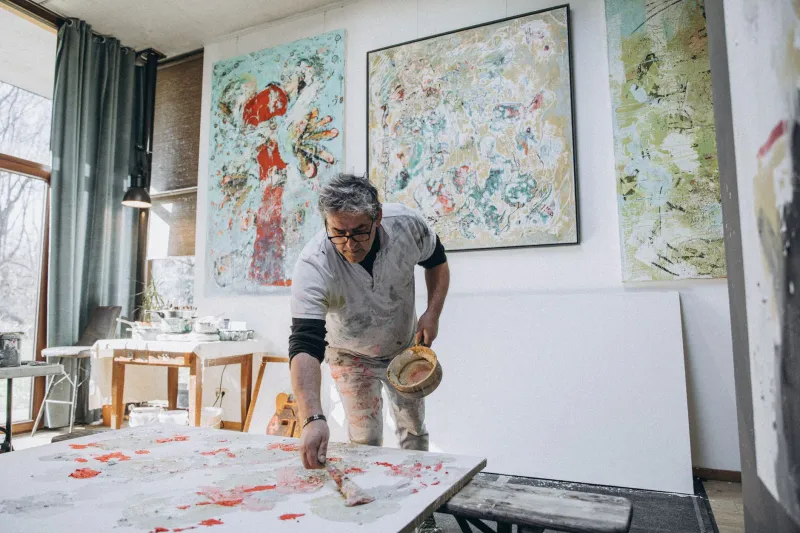
Painters, illustrators, and sculptors working today are navigating this constantly. The pressure to document isn't subtle — it's baked into platform algorithms that reward process content with reach. An artist who shares their studio practice gets followers. An artist who stays silent gets... quiet.
The Case for Showing Everything
Here's where it gets complicated, though. Because the argument for radical transparency isn't nothing — it's actually pretty compelling.
For a long time, the mystification of artistic process wasn't just aesthetic preference. It was gatekeeping. The idea that great art emerges from some untouchable, unteachable genius — that it can't really be broken down or learned — has historically served to keep certain people out of the conversation. If making art is magic, then only magicians get to make it. And the definition of "magician" has never been evenly distributed.
When contemporary artists pull back the curtain and say here's what I actually did, here's what I actually used, here's how long it actually took, they're doing something genuinely democratizing. They're telling a kid in rural Ohio or a working mom in Phoenix that this thing is learnable. That it doesn't require a $60,000 MFA or a studio in Brooklyn. That the process, however messy, is accessible.
That matters. It matters a lot. And dismissing it in the name of preserving some elevated aesthetic experience starts to feel a little precious when you look at who traditionally got to have that experience and who didn't.
The Performer Problem
But there's a third layer here that doesn't get enough attention: what process-sharing does to the artist themselves.
When you start documenting your creative practice for an audience, the practice changes. It just does. You begin to perform the process rather than simply live it. You notice yourself making choices — or avoiding choices — based on how they'll read on camera. The messy, nonlinear, frequently embarrassing reality of creative work gets smoothed into a narrative that's coherent and watchable. The confusion gets edited out. The doubt gets edited out. What remains is a version of creativity that looks a lot more intentional and a lot less human than the real thing.
Some artists are honest about this. They'll tell you that their "studio process" content is basically a performance — a separate creative project that exists alongside their actual work, not a transparent window into it. Which is fine, but it's worth naming. The behind-the-scenes content is, in many cases, just another front.
And audiences, even when they intellectually understand this, still consume it as authentic. The parasocial intimacy of watching someone work creates a feeling of access that may or may not correspond to reality. You think you know how the painting got made. You don't. You know how the artist wanted you to think it got made.
Finding the Middle Ground (If There Is One)
So where does that leave working artists in 2025? Probably somewhere uncomfortable, which is honestly right where art tends to live.
The most interesting approach seems to be selective transparency — sharing process in ways that invite curiosity rather than close it down. Showing the materials without fully explaining the method. Sharing the failures without narrating them into tidy lessons. Giving audiences a glimpse of the studio without handing them a complete map.
This requires a kind of intentionality that's genuinely hard to maintain when you're also trying to post consistently and keep the algorithm happy. But artists who've found that balance tend to describe it as a creative decision in itself — curating what gets revealed is part of the work, not separate from it.
There's also something to be said for varying the mode. A finished piece dropped with no context, no caption, no story. Just the work. In a feed full of process content and explainer threads, that silence hits differently. The mystery becomes the statement.
The Question Worth Sitting With
At the end of the day, the tension between transparency and mystique isn't really about social media strategy. It's about what you believe art is fundamentally for.
If art is primarily a form of communication — a way to connect, to teach, to invite others into a practice — then openness makes sense. Share generously. Lower the barriers. Let people in.
If art is primarily a space for experiences that resist full explanation — for encounters with something that can't be entirely accounted for — then some degree of protection feels right. Keep a few secrets. Let the work be strange.
Most working artists hold both of these beliefs simultaneously, which is why the dilemma doesn't resolve cleanly. You want to be generous and you want to protect the magic. You want to be seen and you want your work to be seen instead of you.
Maybe the most honest thing is to stop pretending there's a clean answer — and start treating the tension itself as part of what it means to make things right now.