Oops, That's Brilliant: How Screwing Up Became the Most Powerful Creative Strategy
There's a particular kind of panic that every artist knows. The brush slips. The glaze cracks in the kiln. The file corrupts and opens looking like something from another dimension entirely. Your first instinct is damage control — fix it, hide it, start over. But what if that moment of dread is actually the most important creative decision you'll ever make?
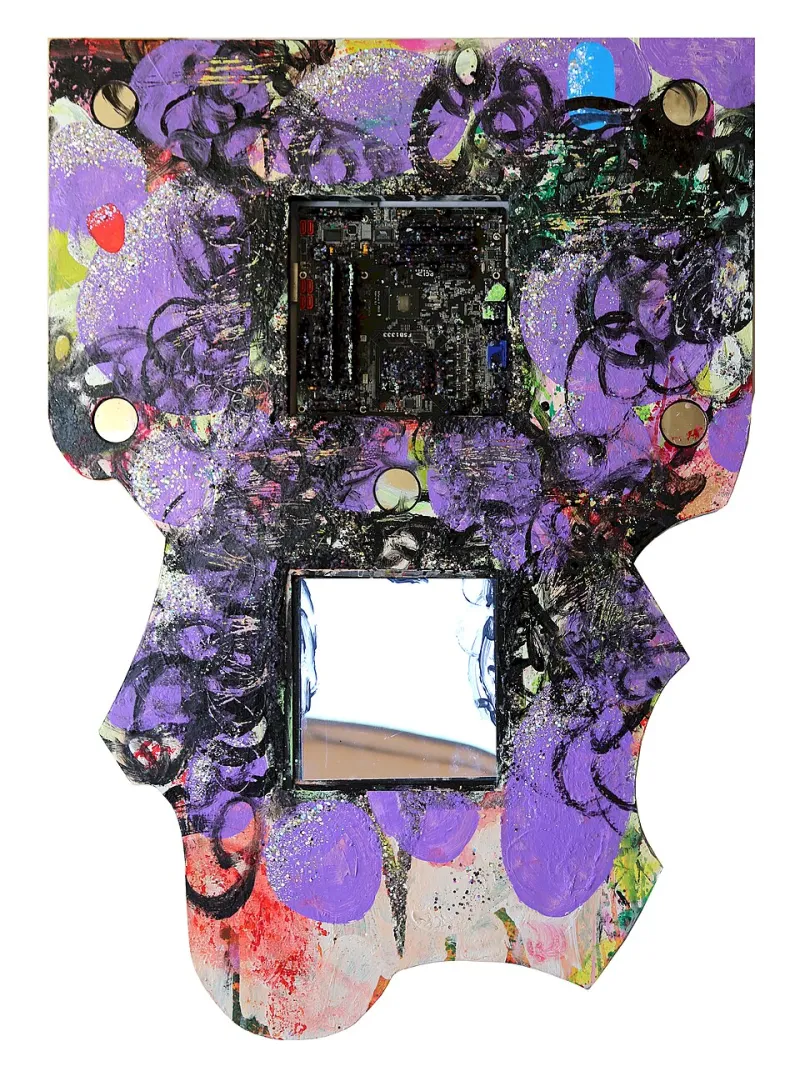
A growing wave of contemporary artists is betting everything on exactly that premise. Instead of correcting their mistakes, they're leaning into them so hard that the accidents become the whole point. The smear, the bleed, the unplanned texture — these aren't flaws to apologize for. They're signatures.
The Psychology of Letting Go (And Why It's So Hard)
Here's the thing about mistakes: our brains are wired to treat them as threats. Decades of schooling condition us to equate errors with failure, and that conditioning doesn't magically evaporate when you pick up a paintbrush. Most artists carry an internal critic who's basically a very anxious hall monitor, clipboard in hand, ready to flag anything that deviates from the plan.
But creativity doesn't actually live in the plan. It lives in the deviation.
Psychologists who study creative cognition have long pointed to what's sometimes called "productive failure" — the idea that making mistakes in a low-stakes environment builds deeper understanding and more flexible thinking than following instructions perfectly. For artists, this translates into something almost counterintuitive: the work you didn't intend to make is often the work that tells you who you actually are.
The trick is developing the awareness to recognize a happy accident when it happens, rather than instinctively reaching for the eraser.
When the Wrong Move Becomes the Right Voice
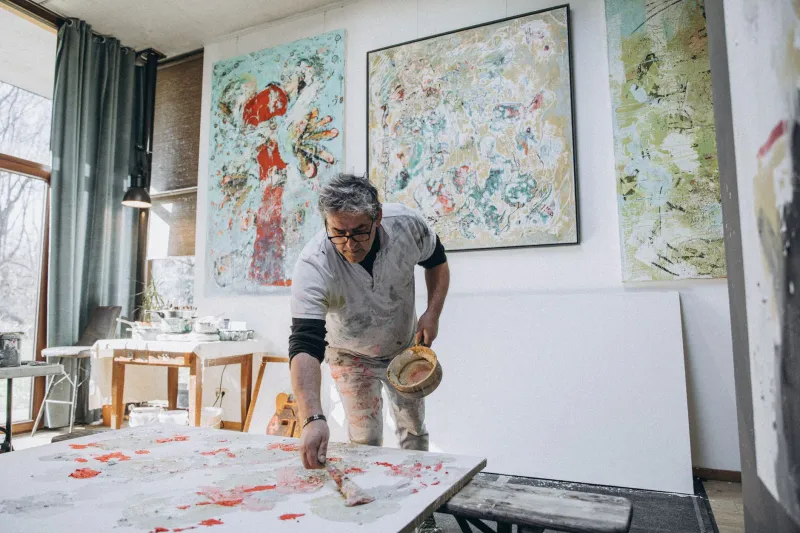
Take the example of abstract expressionist energy in contemporary painting. Artists working in that lineage — many of them based right here in cities like New York, Chicago, and Los Angeles — regularly describe pivotal moments where something went sideways and they chose to follow it instead of fight it. A wash of color that pooled unexpectedly in the corner of a canvas. A palette knife used in frustration that left a mark so raw and immediate it couldn't be replicated intentionally.
That rawness is the thing. When you try to manufacture spontaneity, audiences can feel the artifice. But when an accident genuinely happened and you were present enough to recognize its value? That energy is almost impossible to fake.
Contemporary ceramicist communities — particularly those experimenting with wood firing and raku techniques — have built entire philosophies around this idea. The kiln is essentially a collaborator. You load it with intention, but what comes out is a negotiation between your vision and the fire's. Cracks, ash deposits, unexpected color shifts — these are the kiln's handwriting layered over yours. The most celebrated pieces from these traditions are often the ones where the collaboration was most unpredictable.
The Moment of Recognition: Seeing What You've Got
There's a specific skill that separates artists who mine their accidents from those who just clean them up, and it has less to do with technique than with perception. You have to be able to look at something unplanned and ask, honestly, is this actually better than what I intended?
That question requires a certain ego flexibility that doesn't come naturally. It means accepting that your original idea might have been less interesting than what chance handed you. For a lot of artists, especially early in their careers, that's a genuinely difficult concession to make.
But the artists who get there tend to describe it as a kind of liberation. Once you stop white-knuckling your original vision, the whole process opens up. You start working with the materials instead of imposing your will on them. Paint becomes a partner. Paper has opinions. Digital tools glitch in ways that are sometimes more interesting than anything you'd design on purpose.
Building a Signature From the Unexpected
What's fascinating about the contemporary art world right now is how many recognizable aesthetics are essentially codified accidents. An artist discovers something unplanned, responds to it, keeps responding to it, and over time that responsiveness becomes a language. Other people start to recognize it as distinctly theirs.
This is how signatures actually form — not through relentless refinement of a single technique, but through accumulated conversations between intention and surprise. The artists whose work feels most alive tend to be the ones who stayed curious about what went wrong long enough to figure out what it was actually saying.
Digital artists are navigating a particularly interesting version of this right now. Glitch aesthetics — those fragmented, pixelated, corrupted-data visuals that have moved from underground internet culture into gallery spaces and commercial design — started as literal errors. Corrupted files. Bad compression. Signal noise. Artists who encountered these artifacts and thought wait, this is beautiful rather than I need to fix this essentially discovered a new visual language by being willing to sit with something broken.
Giving Yourself Permission to Fail Productively
If you're a working artist or just someone who makes things, the practical takeaway here isn't complicated, but it does require some deliberate practice. Start keeping what might be called a failure archive — a collection of the work that didn't go the way you planned. Don't throw it out. Don't hide it in a folder called "bad stuff." Look at it regularly.
Ask yourself what each piece has that your successful, intentional work doesn't. Sometimes the answer is nothing — it really was just a bad day. But sometimes you'll notice something: a color relationship you'd never have chosen consciously, a texture that's more interesting than your polished surfaces, a composition that's oddly compelling despite (or because of) its wrongness.
That noticing is the beginning of a signature.
The artists who build the most distinctive bodies of work aren't necessarily the most technically gifted or the most disciplined. They're often the ones who stayed in the room long enough after something went sideways to ask a better question than how do I fix this? They asked: what is this, actually?
And sometimes — not always, but enough times to matter — the answer turned out to be: something I never could have made on purpose.