Performing Realness: The Strange Loop Where Authenticity Becomes Its Own Costume
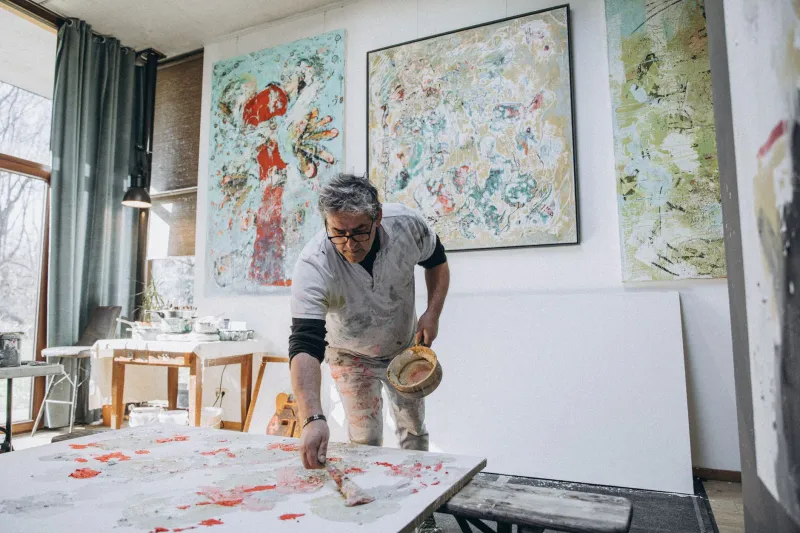
There's a particular kind of Instagram caption that's become almost its own genre. You know the one — the artist who posts a blurry, low-lit photo of their studio at midnight, coffee stains on the desk, half-finished canvas in the background, and writes something like: "no filter, no pretense, just me and the work." The irony? That caption probably went through three drafts.
This isn't a callout. It's actually a fascinating cultural moment worth examining honestly. The demand for authenticity in contemporary creative culture has become so loud, so constant, that authenticity itself has evolved into a polished aesthetic — one with its own rules, its own visual language, and its own performance anxiety.
The Authenticity Economy
Somewhere between the rise of social media and the broader cultural rejection of corporate gloss, audiences started craving the unvarnished. They wanted to see the process, the mess, the doubt. Artists responded — genuinely, at first. Sharing work-in-progress shots, talking about creative blocks, showing the paintings that didn't make the cut. It felt radical and refreshing.
But markets are efficient. What started as a genuine rupture in the polished gallery-and-press-release model quickly became a new template. The "authentic creator" became a brand archetype with its own aesthetic codes: muted tones, candid angles, confessional language, strategic imperfection. What was once a departure from performance became, inescapably, another kind of performance.
This isn't cynicism — it's just how cultural aesthetics work. Every genuine movement eventually gets legible enough to be replicated. The question is what happens to the artists who are actually trying to be real inside a system that has absorbed "realness" as a marketable quality.
When Vulnerability Has a Visual Identity
Think about how the concept of the "raw" aesthetic operates in contemporary American design and art spaces. There's the deliberately unpolished portfolio site, the process video shot on a phone rather than a camera, the artist statement that reads more like a therapy session than a bio. None of these things are inherently dishonest. But they do follow conventions — and conventions, by definition, are constructed.
Designer and cultural critic Hito Steyerl has written about the "poor image" — the low-resolution, heavily circulated visual artifact — as carrying a kind of authenticity currency that high-definition work can't buy. But here's the thing: artists now intentionally shoot in lo-fi, intentionally degrade their image quality, intentionally replicate the aesthetic of the accidental. The simulation of rawness has become indistinguishable from rawness itself.
For a lot of creators, this creates a genuinely uncomfortable bind. You want to share your process honestly, but you're also aware that "honest process content" is a content category with engagement metrics attached to it. You want to be vulnerable, but you know vulnerability performs well. Does knowing that change what you're doing? Does it make it less true?
The Curation You Don't See
Here's something worth sitting with: every act of sharing is also an act of editing. Even the most seemingly spontaneous creative post involves a choice — this moment and not another, this angle and not that one, these words and not those. The artist who shares their "unfiltered" sketchbook is still choosing which pages to photograph. The one who posts about their creative struggles is still deciding how much to reveal and what to protect.
This isn't a flaw in the system. It's just how communication works. Total transparency is both impossible and, honestly, not particularly interesting as an artistic goal. The question isn't whether curation is happening — it always is — but whether the curation serves the work or merely serves the image of the artist as authentic.
There's a meaningful difference between an artist who shares their doubt because it contextualizes the work and helps an audience understand something real, and an artist who performs doubt because it makes them more relatable and therefore more marketable. Both might look identical on the surface. The distinction lives entirely in intention — which, of course, no one but the artist can fully access.
Authenticity as Craft, Not Confession
Maybe the more useful frame here isn't authenticity versus performance, but rather: what is the work actually doing?
Some of the most genuinely moving contemporary art is highly constructed. Cindy Sherman's self-portraits aren't candid — they're elaborately staged — and yet they reveal something deeply true about identity, gender, and the performance of self. On the flip side, some of the most "raw" confessional work can feel hollow precisely because the rawness is the entire point, with nothing underneath it.
Authenticity in art might be less about whether the work is unmediated and more about whether it's honest about its own mediation. The artist who says "this is constructed and here's why" is often telling you something truer than the one who insists they have no agenda.
For contemporary creators navigating this in the US market — where personal brand and artistic output have become increasingly tangled — this might be the most practical reframe available. Stop chasing the feeling of being unfiltered. Instead, ask what you're actually trying to communicate, and whether the form you're using serves that communication or obscures it.
Living Inside the Paradox
The authenticity trap isn't something you escape. It's something you learn to think clearly inside of. The moment you decide to share your work with an audience, you've entered a relational space with its own dynamics, expectations, and feedback loops. Pretending otherwise doesn't make you more genuine — it just makes you less aware.
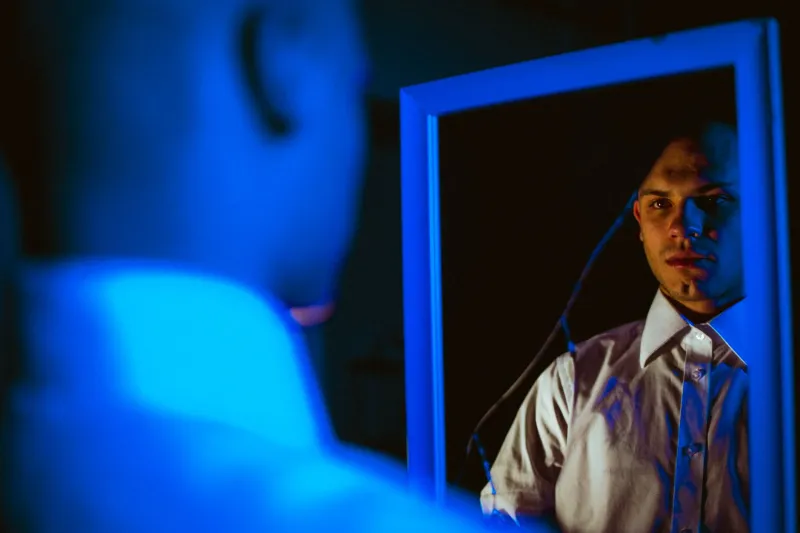
What the most interesting contemporary artists seem to share isn't that they've cracked some code of pure self-expression. It's that they're genuinely curious about the gap between what they intend and what gets received, between what they feel and what they make, between who they are and who they appear to be. That curiosity — not the performance of vulnerability, not the aesthetic of rawness — might be the closest thing to authenticity the work can hold.
So the next time you find yourself crafting a caption about how uncrafted your process is, maybe that's not something to be embarrassed about. Maybe that's just the work, doing what the work does — trying to be seen, in all its complicated, self-aware, imperfectly honest glory.