Going Back to Go Forward: Why Revisiting Old Work Might Be Your Boldest Creative Move Yet
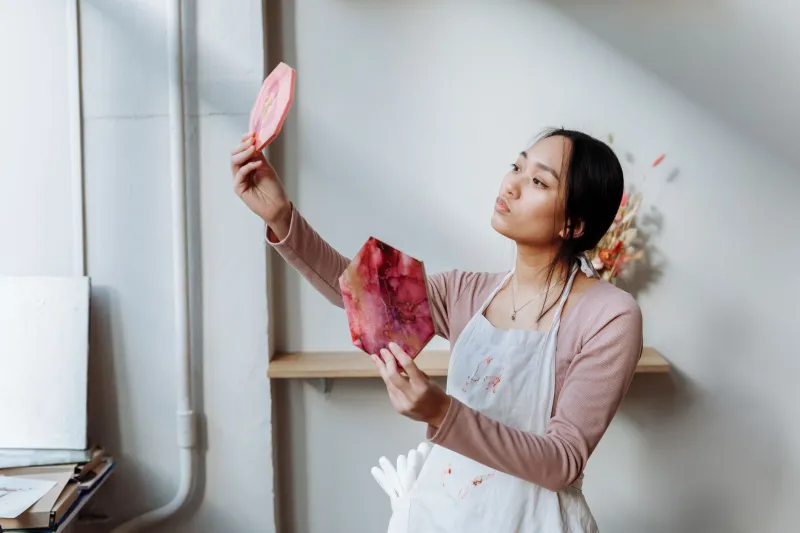
Somewhere between your first sketchbook and wherever you are right now, there's a graveyard of earlier selves. Paintings you'd rather forget. Designs that felt groundbreaking at twenty-two and cringe-worthy at thirty. Photographs you took before you really understood light. Most artists treat this archive like a locked room — something to be acknowledged but never reopened.
But a growing number of contemporary artists are doing the opposite. They're kicking that door wide open, pulling out the old stuff, and doing something genuinely surprising with it: they're remaking it. Not copying it. Not referencing it in a footnote. Actually reconstructing it, through the lens of who they've become.
And honestly? It might be the most creatively courageous thing you can do right now.
The Cultural Obsession with 'New' Is Holding Artists Back
American creative culture has a complicated relationship with newness. We celebrate the debut, the launch, the first drop. We reward artists for constantly producing fresh output, and we quietly stigmatize anyone who seems to be retreading old ground. The word "derivative" gets thrown around like an insult, even when what's being derived is the artist's own prior work.
But this obsession with novelty has a cost. It assumes that forward motion is always linear — that making something new automatically means making something better. It also ignores a fundamental truth about how creativity actually develops: understanding deepens over time, and that deepened understanding deserves a canvas.
When a writer publishes a revised edition of a novel they wrote twenty years ago, we call it a "definitive edition." When a musician re-records an album with a decade of additional experience behind them, we call it a "reimagining." So why, when a visual artist returns to a painting from their early career and reconstructs it entirely, do we sometimes whisper that they've run out of ideas?
The framing is wrong. Returning isn't retreating. It's reckoning.
What Actually Happens When You Remake Your Own Work
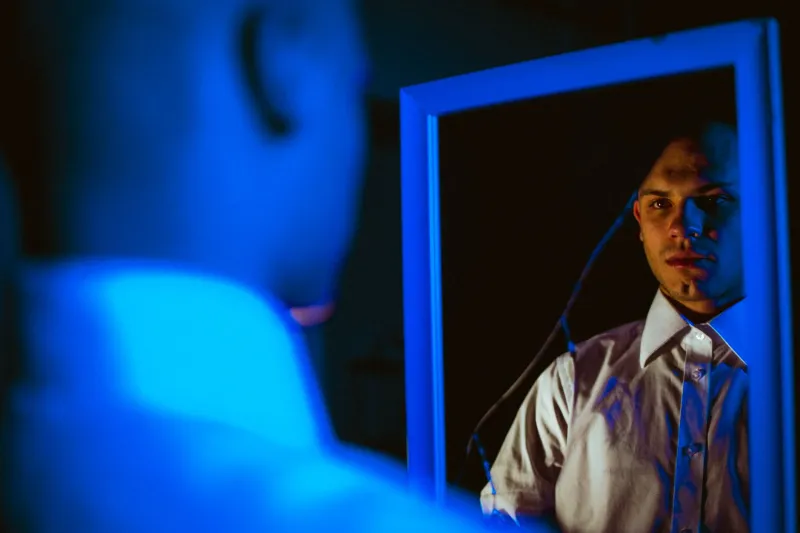
Artists who've gone through the process of revisiting and reconstructing earlier pieces often describe it as unexpectedly disorienting — in the best possible way. You're not just looking at old work. You're looking at a past version of yourself making decisions in real time, and you can now see exactly where that version of you was limited, where they were bold, and where they were just plain wrong.
That kind of self-confrontation is rare. Most creative feedback comes from outside — a critic, a professor, a comment section. But remaking your own work forces an internal dialogue that no external critique can replicate. You become both the original artist and the informed observer, and the tension between those two positions is where the interesting stuff lives.
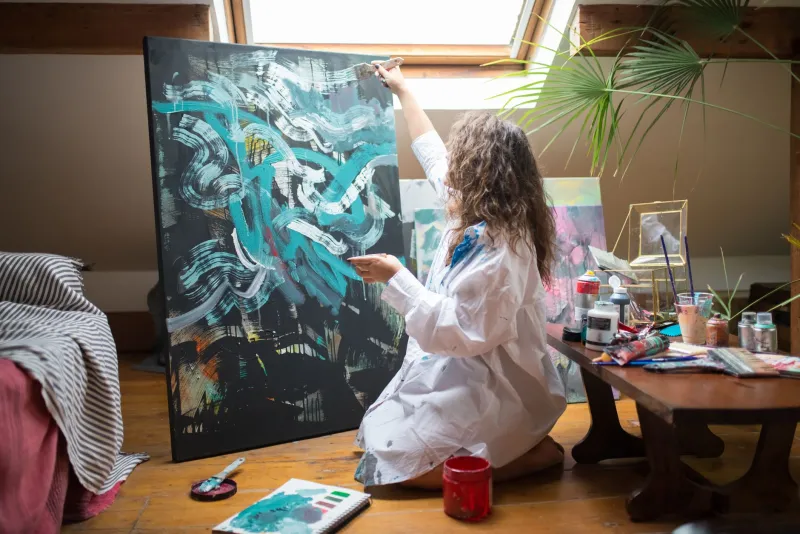
One painter who returned to a series of abstract landscapes she'd made during art school described it as "arguing with a stranger who happens to have my handwriting." The instincts were familiar, but the reasoning was foreign. Reconstructing those pieces meant not just applying new technique, but genuinely negotiating with her earlier self about what the work was actually trying to say.
That negotiation produces something neither version of the artist could have made alone.
Recontextualization as a Critical Act
There's also a political and philosophical dimension to this practice that doesn't get enough credit. When an artist returns to earlier work and reconstructs it through a changed perspective — whether that shift is personal, cultural, or political — they're doing something more than updating aesthetics. They're making a statement about how meaning isn't fixed.
A photograph taken in 2010 means something different in 2025. A painting made before a major life event carries different emotional weight after that event. An illustration created before an artist developed a fuller understanding of representation and identity can be reexamined, dismantled, and rebuilt in ways that acknowledge growth without erasing history.
This is actually a pretty radical position to take in a culture that treats finished work as final. To say, "this piece isn't done because I'm not done" — that challenges the entire notion of what completion means in creative work.
Some artists have taken this even further, creating diptychs or series that deliberately present the original alongside the remake, inviting the viewer into the conversation rather than hiding the process. The gap between the two versions becomes the artwork itself.
The Psychological Case for Going Back
Beyond theory, there's something genuinely therapeutic about this practice — and not in a soft, vague way. Research in creative psychology suggests that revisiting and reworking past output can be a powerful tool for building what's sometimes called "creative self-efficacy" — basically, your confidence in your own ability to grow and adapt.
When you remake something you once made and can clearly see the improvement, you're not just producing better work. You're generating evidence of your own development. That evidence matters. It's concrete. It's yours. And it can be a serious antidote to the kind of creative paralysis that comes from comparing yourself to other artists rather than to your own prior self.
There's also something to be said for the way this practice reframes failure. That painting you hated from five years ago? It wasn't a failure — it was a draft. A very long draft that took five years to revise. Seen that way, your archive stops being a collection of embarrassments and starts functioning as raw material.
How to Actually Start
If you're sitting with a folder of old work and feeling the pull to revisit it, here are a few ways to approach it without getting stuck in nostalgia or self-criticism:
Don't restore — reconstruct. The goal isn't to fix the old piece; it's to make a new one that's in conversation with it. Give yourself permission to change everything.
Set a rule. Some artists find it useful to establish a constraint for the remake — same subject, different medium. Same palette, different composition. The constraint keeps the project focused and prevents it from becoming an open-ended identity crisis.
Document the gap. Whether through notes, a side-by-side comparison, or a process video, capturing the distance between the original and the remake often reveals more than either piece does on its own.
Resist the urge to explain. Let the work do the talking. You don't owe anyone a justification for returning to your own material.
The Work Was Never Finished Anyway
Here's the thing about creative work that nobody really tells you at the start: it doesn't end when you sign it, ship it, or post it. It keeps living, keeps meaning new things to new people — including you. The you who made something five years ago was doing their best with what they had. The you who exists now has more to offer that same idea.
Going back isn't a sign that you've stalled. It might actually be the clearest sign that you've moved.
At Madhur Arts, we've always believed that a creative practice is exactly that — a practice. Something ongoing, iterative, alive. The archive isn't a trophy case or a hall of shame. It's a conversation waiting to continue.
So open the folder. Pull out the piece you've been avoiding. See what happens when you talk back to it.