The Archive Is Part of the Artwork: A Working Artist's Guide to Being Understood After You're Gone
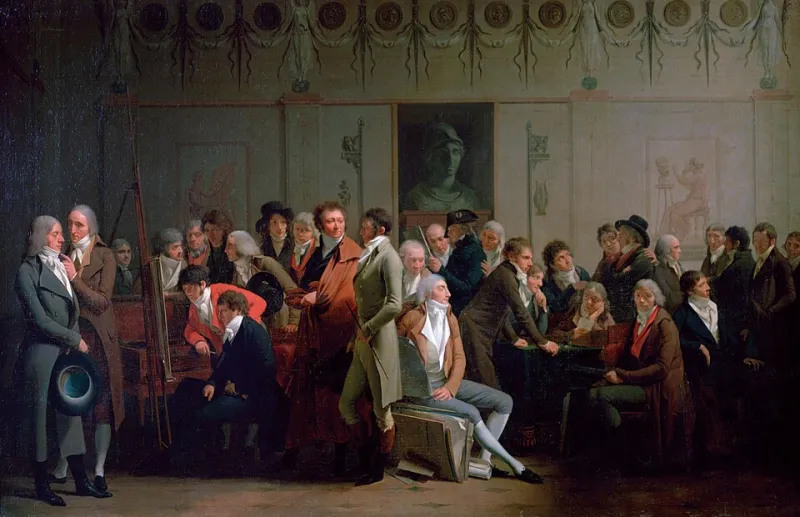
Photo: Louis-Léopold Boilly, Public domain, via Wikimedia Commons
Most artists spend years learning how to explain the work. Then we leave the explaining to whoever finds the studio keys.
That is the uncomfortable heart of estate planning for artists. It is not really about paperwork. It is about making the work legible when you are not in the room to translate it. At Madhur Arts, we talk a lot about contemporary vision and creative practice. The archive is part of that practice. Treat it like a material, not a chore.
Start with the work, not the will
Before anyone signs anything, inventory the studio. All of it. Finished paintings, works on paper, sculpture, prints, studies, sketchbooks, maquettes, test prints, and that stack of pieces you keep meaning to photograph. If it exists, it gets a line.
Your inventory does not need fancy software. A spreadsheet works. What it needs is consistency. Give every work a unique ID. Photograph the front, back, signature, and any labels. Record title, year, medium, dimensions, edition size if relevant, condition notes, location, insurance value, and retail value if you have one. Add a short note on provenance: where it has shown, who has owned it, whether it is promised to anyone. If a work is not for sale, say so. If it is a study for a larger piece, say that too.
The goal is not to turn your studio into a museum registrar's fantasy. The goal is to keep your heirs from guessing. Guessing is how good work ends up in a garage sale next to a broken blender.
Consignments are not clutter
Unsold work is only half the story. The other half is work that is out in the world: at galleries, in group shows, on loan, in storage, at a framer, or waiting for a client to approve a shipping quote. That is the paperwork people miss.
Keep a clean list of every active consignment. Include the gallery or venue, contact name, contract date, commission split, retail price, insurance responsibility, and return terms. Keep copies of the agreements in one folder, digital and physical. If a gallery owes you money, document it. If a work is promised to a show in 2027, document that too. Your executor should not have to reconstruct your career from email threads.
Provenance records matter for the same reason. Buyers, museums, and appraisers want a chain of ownership. So do tax professionals. Keep invoices, bills of sale, donation receipts, shipping records, and condition reports. If you traded a piece for dental work or a website redesign, write it down. Barter is still history.
Digital files are studio materials now
A lot of contemporary practice lives in folders: RAW files, layered Photoshop documents, scans, edition files, video exports, website backups, and the social accounts that function as a public-facing portfolio. If those disappear, the work is harder to place, publish, or protect.
Name files like a grown-up. Use a simple system: year, title, version, and file type. Back up to two places, ideally one local drive and one cloud service. Keep the passwords somewhere your executor can reach, not in your head. Use a password manager with an emergency access feature, or leave written instructions with your attorney. Include your domain registrar, website host, email provider, and any platform where you sell work.
This is not paranoia. It is basic studio hygiene. A heir who can find your high-resolution images and your exhibition history is a heir who can say yes to a museum request instead of losing it in a dead laptop.
Leave instructions, not just assets
The legal documents matter: a will, maybe a trust, an executor, and an attorney who understands art. State law varies, and this is not legal advice. But the legal structure is only half the job. The other half is a letter of intent.
Write down what you want to happen to the work. Which pieces should be kept together? Which can be sold? Are there works you want donated? Do you want unfinished pieces destroyed, preserved, or completed by someone else? Who should make decisions about exhibitions, reproductions, and licensing? Are there galleries or dealers you trust, and ones you do not? Say it plainly. A letter of intent is not always legally binding, but it gives your heirs a map.
Then talk to the people who will carry it. Pick an appraiser before you need one. Introduce your executor to your gallery contacts. Show a trusted friend where the inventory lives. Update the archive every couple of years, especially after a solo show, a big sale, or a move.
The studio after you is still your studio. The archive is how you keep speaking in it. Build it while you can still explain the punchline.