Cut, Paste, Repeat: Why Collage Is the Most Honest Art Form of the Digital Age
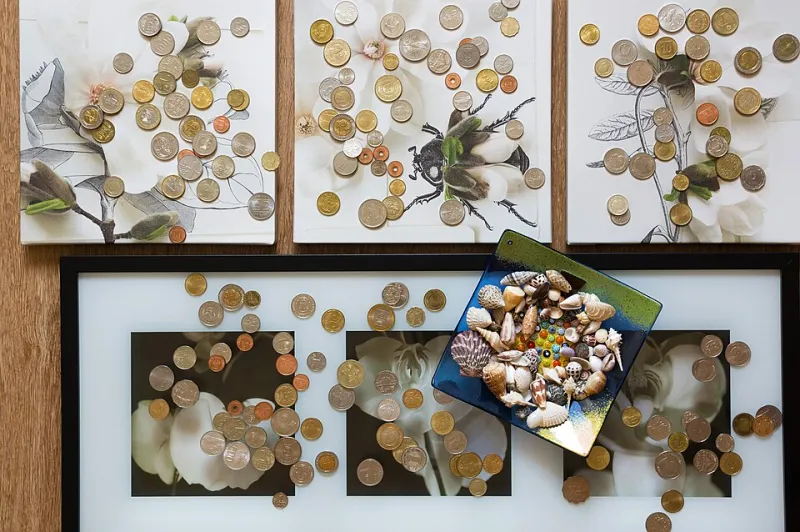
Photo: Vyacheslav Argenberg, CC BY 4.0, via Wikimedia Commons
If you want to understand how a generation makes meaning, look at how they make pictures. And right now, a significant chunk of the most exciting visual work coming out of younger American artists isn't painted from scratch or photographed in a single frame — it's assembled. Layered. Built from pieces of other things.
Collage, in every form it currently takes — physical cut-and-paste, digital assemblage, mixed-media layering, found-image remixing — has become the defining visual language of Gen Z creative culture. And once you understand why, it's hard to see it as anything other than the most logically honest art form for this particular moment in time.
A Medium That Matches the Moment
Think about how Gen Z actually experiences information. Not in long, linear narratives — in fragments. A TikTok clip, a screenshot, a meme that references three other memes, a Spotify playlist that jumps between decades and genres, a mood board that pulls from 1970s fashion and Y2K aesthetics and last week's viral moment simultaneously.
This isn't shallow consumption. It's a genuinely different relationship with culture — one where meaning is assembled from pieces rather than handed down whole. Collage, as a medium, is essentially that experience made physical. Or digital. Or both.
When a 22-year-old artist in Chicago or Austin or Brooklyn makes a collage, they're not working against the fragmentation of modern life — they're working with it. The medium and the message are the same thing.
The Long History Behind the New Wave
It's worth acknowledging that collage has a serious pedigree. Picasso and Braque were experimenting with papier collé in the early 1900s. The Dadaists used photomontage as a weapon against political propaganda. Hannah Höch was making razor-sharp feminist critiques through cut-and-paste imagery decades before the word "intersectional" existed. Romare Bearden used collage to construct a visual language for Black American experience that painting alone couldn't hold.
Every generation that's picked up the medium has found it useful precisely because it doesn't require starting from nothing. You're working with what already exists — which means you're inherently in conversation with culture, with history, with the visual world as it already is.
Gen Z artists know this history, at least intuitively. But they've also inherited a completely new set of raw materials. The internet is an essentially infinite archive of images, sounds, textures, references, and cultural artifacts. For a generation that grew up with that archive at their fingertips, collage isn't a nostalgic throwback — it's the natural way to work.
Authenticity Through Fragments
Here's the part that's worth sitting with from a process standpoint: collage is one of the hardest mediums to fake.
Painting can be technically impressive without saying much. Photography can be beautiful without being honest. But collage requires decisions at every layer — what to include, what to cut away, what to place next to what, how much tension to create between elements. The juxtapositions are where all the meaning lives, and juxtaposition is incredibly hard to manufacture without genuine intention.
When two images are placed in relationship with each other, that relationship means something. It can be ironic, tender, violent, absurd, nostalgic, critical — but it can't really be nothing. The act of choosing and arranging is inherently expressive in a way that's difficult to hide behind technical skill.
This might be part of why collage feels so authentic coming from younger artists. There's nowhere to hide in the composition. Every choice is visible, and the cumulative effect of those choices tells you a lot about how the artist actually sees the world.
Digital Tools Are Expanding What's Possible
The current collage moment isn't just happening on studio floors with X-Acto knives and vintage National Geographics, though that aesthetic is very much alive and well. It's also happening in Photoshop, Procreate, and a dozen other digital tools that allow for layering and compositing with a level of precision and scale that physical collage can't match.
What's interesting is that even in digital work, the collage sensibility persists. Artists are pulling from found imagery, scanning physical textures, incorporating handwritten elements, mixing photography with illustration, building compositions that feel deliberately assembled rather than rendered. The tool changes; the logic stays the same.
There's also a whole category of artists working in what you might call hybrid collage — starting physically, scanning the work, continuing digitally, printing and cutting again, scanning once more. The physical and digital layers become part of the visual record, and the process itself becomes part of the meaning.
What Gets Said Through the Layers
Practically speaking, what are contemporary collage artists actually exploring through the medium? A few themes keep surfacing.
Identity as construction. For a generation that's grown up understanding gender, race, sexuality, and selfhood as complex and non-fixed, collage is a natural fit. The assembled self — made from multiple, sometimes contradictory pieces — maps directly onto how many young artists understand their own identities.
Cultural overload and media criticism. There's a long tradition of using found commercial imagery to critique consumer culture, and that work is very much continuing. But younger artists are also turning the lens on digital culture itself — using screenshots, UI elements, and internet ephemera as raw material for commentary on how we live online.
Nostalgia and temporal dissonance. Mixing imagery from different eras — a 1950s advertisement next to a contemporary photograph, vintage textures layered under digital type — creates a kind of temporal vertigo that feels deeply resonant right now. We're a culture that has access to all of history simultaneously, and collage can hold that strangeness in a way that more unified mediums can't.
Why This Matters Beyond Trend
It would be easy to read the collage wave as just another aesthetic cycle — something that'll peak and give way to the next thing. And sure, specific visual styles within collage culture will come and go.
But the underlying logic — that meaning is assembled, that authenticity lives in the relationship between fragments, that working with existing cultural material is a legitimate and even necessary creative act — that's not going anywhere. It's too well-suited to the actual conditions of contemporary life.
For artists working in this space, the invitation is to take the medium seriously on its own terms. Not as a stepping stone to "real" art, not as a shortcut, but as a full and demanding practice with its own history, its own logic, and its own very specific capacity for truth.
Fragments, it turns out, can hold a lot.