Before You Pack the Brushes: A Residency Offer Checklist for Suspicious Artists
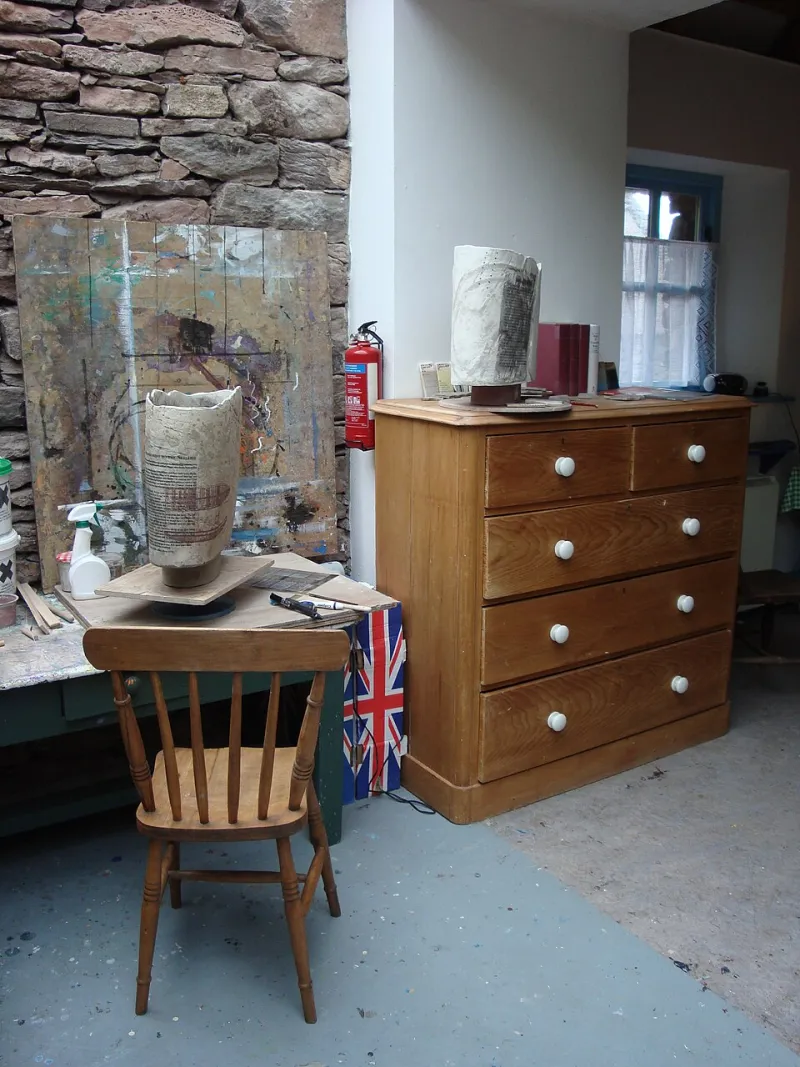
Photo: Bridgit Honoria Scott, CC BY 4.0, via Wikimedia Commons
A residency offer is a small art world in miniature. It has a brochure, a selection committee, a studio, a promise of time, and usually a fee. It can be genuinely transformative. It can also be a very expensive way to sit alone in a converted barn while the exhibition never materializes.
The difference is not cynicism. It is reading the offer twice. Residencies are part of the contemporary art ecosystem, and like any ecosystem, they have predators, accidents, and well-meaning institutions with bad paperwork. Before you pack the brushes, ask these five questions.
1. The fee has a fog machine
Some residency fees are clear: tuition, housing, studio, meals, and materials, all listed in one place. Others arrive in pieces. There is an application fee. Then a program fee. Then a housing deposit. Then a materials charge. Then a refundable damage deposit that somehow becomes non-refundable when you arrive.
Ask for the total cost before you apply, not after you are accepted. Ask what the fee covers and what it does not. Ask about payment schedules, refund policies, and whether the residency offers scholarships or work exchange. If the organization is a US nonprofit, check its tax status and look at its recent programming. A 501(c)(3) designation is not a guarantee of good behavior, but it is a data point. If the fee structure is vague before acceptance, assume it will be vaguer after.
2. Studio access is a rumor
Time is the product a residency sells, but space is the thing you actually need. Ask how many hours a day the studio is available. Is it private or shared? Is there a key, a code, or a staff member who locks up at five? Is there ventilation for oil paint, or a sink for ceramics, or a loading dock for large work? Is there storage? Is there climate control? Is the building accessible?
A studio that is technically included but practically unavailable is not a studio. It is a photograph in a brochure. Get the square footage, the access hours, and the name of the person who handles studio problems. If the residency cannot answer those questions before you arrive, they will not answer them when your canvas is wet and the door is locked.
3. Exhibition promises evaporate
Many residencies end with an open studio, a group show, or a catalog. Some of those promises are real. Some are aspirational. Ask who curates the exhibition, when it opens, how long it runs, and whether it is guaranteed in the agreement. Ask who pays for shipping, framing, installation, and documentation. Ask whether works are for sale and what commission the venue takes.
If the exhibition is described as a possibility rather than a commitment, treat it as a possibility. That is not a dealbreaker. It is information. The problem is when artists pay for a residency because they believe a show is included, then discover the show is a hallway with track lighting and a sign-up sheet. Get the promise in writing, or adjust your expectations and your budget.
4. Insurance is the quiet gap
Residencies involve travel, tools, chemicals, shared kitchens, and other people's work. Ask who insures your artwork while it is on site. Ask who covers damage to the studio, theft, and liability. Ask whether you need your own policy. If you are shipping work, ask who insures it in transit and who files the claim if something breaks.
This is not a hypothetical. A kiln misfires. A pipe bursts. A visiting curator backs into a pedestal. The residency should have a certificate of insurance and a clear claims process. If the answer is we have never had a problem, that is not an insurance policy. It is a hope. Ask for the deductible, the coverage limits, and the name of the insurer.
5. Rights grabs hide in the fine print
The contract may ask for more than you expect: images of your work for marketing, a license to reproduce your process, teaching responsibilities, exclusivity, or a first right of refusal on future sales. Some of that is normal. Some of it is a rights grab.
Read the intellectual property clause slowly. Who owns the work you make during the residency? Who owns the documentation? Can the residency use your image and work in perpetuity, or for a limited period? Can they sublicense to sponsors? Do they claim rights to your teaching materials? If there is an AI training clause, read it twice. Ask for the exact license scope, territory, and duration. Ask what happens if you want to opt out.
A good residency will explain its terms without hostility. A bad one will tell you everyone signs this. Everyone does not have to. You are allowed to negotiate, annotate, and walk away.
The point of skepticism is not to avoid residencies. It is to choose them with your eyes open. A residency should give you time, context, and a room of your own. It should not cost you your rights, your savings, and your studio practice in the name of a line on your CV. Read the offer twice. Then pack.