Seven Ways to Know You're Ready for a Solo Show (and One That Says You're Not)
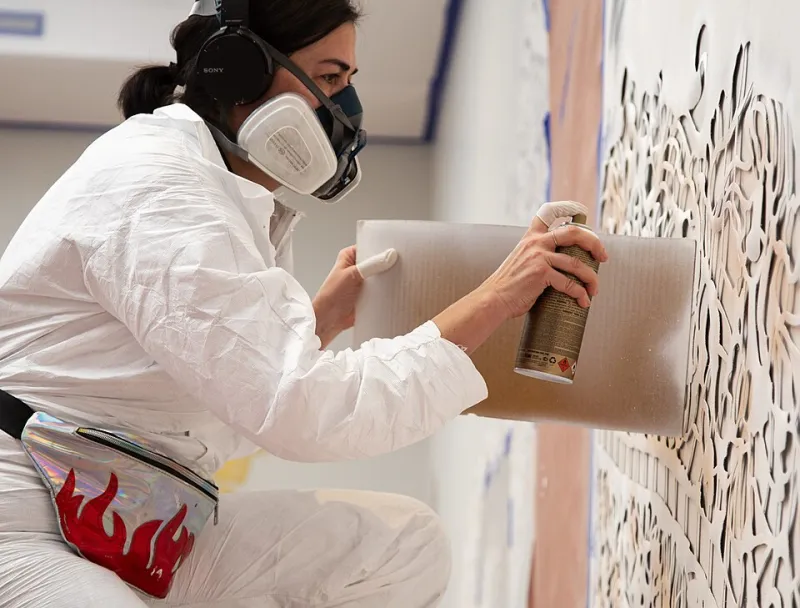
Photo: Photography by Bob Packert, CC BY-SA 4.0, via Wikimedia Commons
The solo show is the art world's favorite ambiguous milestone. It sounds like a promotion, but it's closer to a stress test. A group show asks whether one of your pieces can hold a wall next to someone else's. A solo show asks whether twenty of your pieces can hold a room next to each other, for six weeks, with your name on the door.
That's a different question, and it's one a lot of us answer badly because we've never honestly asked it. So here's a practical, slightly rude checklist. It won't tell you if you're talented. It will tell you whether the work is ready to be alone in a room with strangers.
First, the Difference Between a Body and a Pile
A pile of pieces is work you made. A body of work is work that argues with itself.
Bodies repeat. Bodies contradict. Bodies have edges — themes that got abandoned, motifs that stuck around without permission, a palette that shifted halfway through and never shifted back. If you can't see a fight happening across your last three years of work, you probably have a pile, and a pile looks like a tag sale when you hang it on four walls.
The good news is that bodies can be assembled retroactively. The bad news is that it takes time you can't fake.
The Seven Signs
1. You can hang twelve pieces together and they don't fight. Not twenty. Twelve. If twelve pieces on one wall look like an argument between strangers, the room isn't ready. If they look like a conversation with a few raised voices in it, keep going.
2. You can say the through-line in one sentence a stranger repeats back. Not a paragraph. Not the press release. One sentence, in plain English, that someone could text to a friend. If you need three paragraphs to explain why the work belongs together, the work probably doesn't know yet either.
3. You've been through at least two real group shows or juried situations with real rejection. Being told no by someone who has actually seen the work is the cheapest education in the business. A solo show should be preceded by a few rooms that weren't yours.
4. You have a list of at least a hundred people you'd genuinely invite by name. Not followers. Names. People who have seen your work in person, bought something, written about it, or told you they wanted to see more. If that list is twelve people and half of them are relatives, you have a beautiful show and an empty room.
5. You can install and light the space in two days without crying. The gap between making work and presenting work is a skill. If hanging still feels like a crisis, do a weekend pop-up first. Learn the height of a nail.
6. The work has survived being seen together at least three times. A studio wall lies. You need the reality of a bad room, a strange corner, a piece that only works from nine feet away. Three real hangs — a group show, a community center, a friend's garage — will tell you more than any amount of reorganizing your hard drive.
7. Someone with a room asked you. This is the least romantic of the signs and the most reliable. Venues ask people because the work has been visible somewhere. If no room has ever asked, spend six months making yourself askable rather than building a show nobody has invited.
The One Sign You're Not Ready
You want the solo show more than you want the work that's in it.
That's it. That's the sign. If the show is mostly a way to prove something to a professor, an ex, a rival, or the version of yourself who didn't get into the MFA program, the work will feel like evidence rather than an invitation. Viewers can smell it. The room gets tight.
A solo show done for the wrong reason usually has a long title, a very earnest wall text, and a nagging sense that the artist is standing just offstage waiting for applause. It's not a crime, but it's a waste of a good room.
A Test You Can Actually Run
Before you commit, do this: print tiny images of your twenty best pieces. Spread them on the floor. Rearrange them for an hour without deciding anything. Then step back and ask the only question that really matters.
Is the room better with this in it, or is the world only marginally improved by the fact that these objects exist?
Both answers are useful. If it's the second one, wait. Make more work, hang it somewhere that isn't yours, and let a stranger tell you what they see. If it's the first one, stop reading checklists and go call the venue.
Readiness isn't a credential. It's a decision you make after enough evidence. The evidence doesn't have to be perfect. It just has to be in the room.