Art Has Always Been a Conversation: Why the Lone Genius Was Never Real

There's a story we've been telling about artists for a long time. It goes something like this: somewhere in a studio, a solitary figure — tortured, brilliant, untouched by outside noise — reaches into the ether and pulls out something entirely new. A singular vision. A finished statement. Pure, original genius.
It's a great story. It's also largely fiction.
The most compelling creative voices emerging right now aren't pretending otherwise. They're working differently — openly, fluidly, in constant dialogue with everything that came before and everything happening around them. And far from being a compromise, that approach is starting to look like the most intellectually honest way to make art in the twenty-first century.
Where the Myth Came From
The idea of the lone creative genius is basically a Romantic-era invention — and not "romantic" as in candlelit dinners. We're talking about the 18th and 19th century European literary and artistic movement that elevated individual feeling, personal vision, and the idea of the artist as a kind of secular prophet.
Before that? Artists worked in workshops. They had apprentices, collaborators, patrons breathing down their necks. Rembrandt ran what was essentially a production studio. Renaissance masters painted alongside their students so routinely that art historians still argue about who actually touched what in certain famous works. The idea that creative output should be traceable to a single, untouched mind is genuinely new — and weirdly specific to a particular cultural moment in Western history.
Somehow, though, that model became the default. The template. The thing every art school, gallery press release, and artist bio quietly defaults to, even now.
The Networked Artist Is Not a New Thing — But the Honesty Is
Here's what's actually changed: creators today aren't just working in dialogue with their influences — they're saying so out loud. Loudly, even. And that transparency is reshaping what artistic integrity looks like.
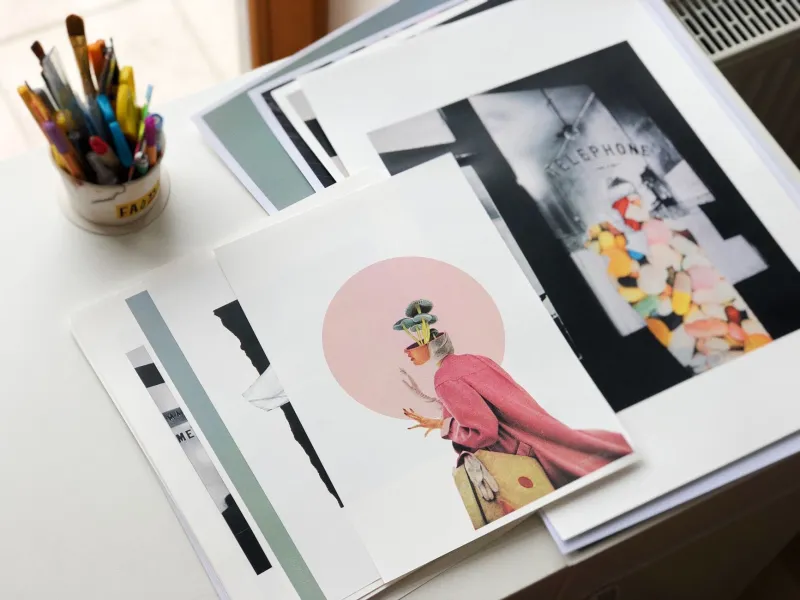
Take the way contemporary visual artists operate on platforms like Instagram or Are.na. Reference images, mood boards, and half-formed ideas get shared publicly in real time. Work-in-progress posts invite feedback before anything is "finished." Artists tag each other, riff on each other's concepts, build visual threads that cross accounts and aesthetics and genres. The creative process isn't hidden behind a mystique — it's the content.
This isn't laziness or lack of imagination. It's a fundamentally different philosophical stance: art as ongoing exchange rather than delivered product.
Remix as Method, Not Shortcut
There's still a reflexive discomfort in some corners of the art world when the word "remix" comes up. It carries baggage — associations with derivative work, with not trying hard enough, with the kind of content-farm churn that floods social feeds. That discomfort is worth examining, because it usually rests on the assumption that originality is both possible and desirable as a pure state.
But consider what remix actually involves when it's done with intention. You're choosing what to pull from an enormous field of existing material. You're deciding what to emphasize, what to discard, what to recontextualize. You're making an argument about meaning by placing things in new relationship to each other. That's not a lesser form of creative thinking — it's a specific and sophisticated one.
Some of the most critically respected work in contemporary American art operates exactly this way. Artists like Kara Walker engage with historical imagery and visual tropes so deliberately that the "borrowed" material becomes the critical point. The remix isn't incidental to the meaning — it IS the meaning.
Dropping the Finished Statement
Another thing the new model challenges is the idea of the artwork as a closed, complete declaration. The traditional gallery model reinforces this: work gets finished, framed, hung, sold, and frozen. The artist moves on. The piece becomes an object.
A growing number of creators are pushing back on that arc — treating their bodies of work as living documents rather than collections of finished statements. Series that evolve publicly. Pieces that get revisited and revised. Exhibitions that explicitly acknowledge earlier versions of the same work. There's a willingness to say: this is where I am right now, not where I've arrived.
In a cultural moment where we're all swimming in infinite reference — every image ever made essentially available on a phone screen — pretending that art emerges from a sealed chamber feels less like integrity and more like performance. The artists dropping that performance are finding something more interesting on the other side of it.
What This Means for How We Evaluate Art
If we're letting go of originality-as-purity as the primary measure of creative value, what replaces it? This is where things get genuinely interesting.
Perspective becomes more important than novelty. The question shifts from "has this been done before?" to "what does this specific person bring to this material?" Point of view, curatorial instinct, the particular way an artist moves through a conversation — these become the real markers of creative distinction.
Contextual intelligence matters more, too. Understanding where something comes from, what it's in dialogue with, why a particular reference is being invoked — that literacy is part of what makes work resonate or fall flat. The networked artist isn't just pulling from a grab bag; they're making choices that reflect a genuine understanding of the material they're working with.
And honesty — actual, uncomfortable honesty about influence and process — starts to read as a creative virtue rather than a liability.
The Conversation Isn't Chaos
None of this means artistic vision doesn't matter. It means vision operates differently than the myth suggested. The most compelling creators working today aren't visionless — they're deeply, specifically themselves in how they navigate an ocean of influence. Their fingerprints are all over everything they make, even when (especially when) the raw material came from somewhere else.
Madhur Arts exists in that space — where creative work is understood as part of something larger, in constant dialogue with art history, contemporary culture, and the evolving language of visual communication. The idea that a single voice could exist outside all of that was always a little lonely, honestly. The conversation is more interesting anyway.
The remix isn't a compromise. It's the point.