Culture Is the Canvas: How a New Wave of Artists Is Building Real Careers on Borrowed Material
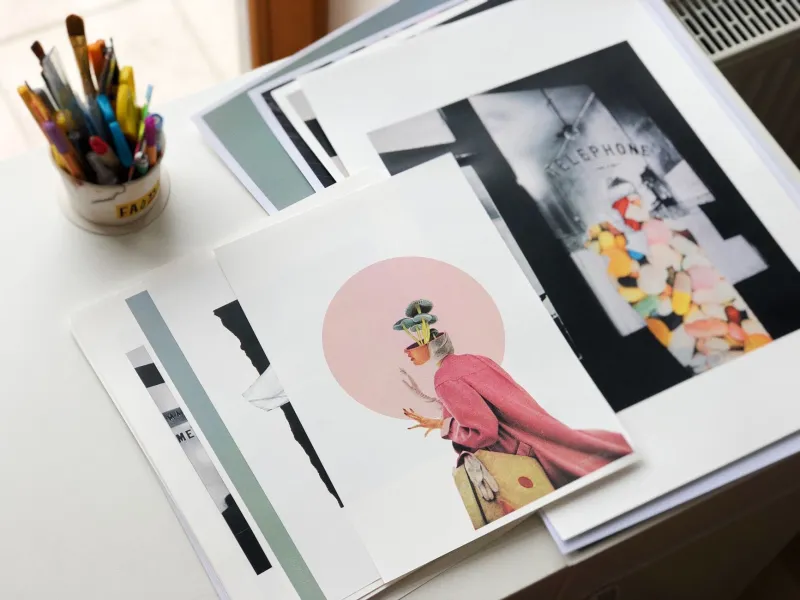
There's a moment in almost every creative's life when they realize the blank canvas isn't actually blank. It's loaded — with influences, references, borrowed rhythms, half-remembered images, and cultural shorthand absorbed over a lifetime. Some artists try to scrub all of that away in search of some mythical originality. Others lean into it completely, treating the entire cultural landscape as raw material. The second group? They're the ones quietly building some of the most interesting careers in contemporary art right now.
This is the remix generation — and they're not apologizing for a single sample.
What We Mean When We Say "Remix"
The word remix gets thrown around loosely, so it's worth pinning down what we're actually talking about. In the broadest sense, remixing in contemporary art means taking something that already exists — a song, a photograph, a painting, a brand identity, a film clip, a meme — and transforming it into something with new meaning, new context, or new aesthetic life.
That's different from copying. It's also different from simple homage. The key ingredient is transformation. When New York-based visual artist Hank Willis Thomas takes vintage advertising imagery and reframes it to expose racial exploitation, he isn't reproducing those ads — he's weaponizing them. When a producer like Madlib constructs entire albums from chopped and pitched samples, he's composing something genuinely new from fragments that existed before. The source material is visible, even celebrated, but the destination is somewhere else entirely.
This distinction matters enormously — not just creatively, but legally.
The Legal Landscape: Fair Use Isn't a Free Pass
Let's be real: the legal side of remix culture is genuinely complicated, and any artist working in this space needs to understand the terrain before they wade in.
In the US, the doctrine of fair use is the primary legal framework that allows artists to work with copyrighted material without permission. But fair use isn't a guaranteed shield — it's a defense, evaluated case by case using four factors: the purpose of the use (commercial vs. educational, transformative vs. reproductive), the nature of the original work, how much of the original was used, and the effect on the original work's market value.
Transformation is the magic word. Courts have consistently rewarded work that adds new meaning or commentary. The Supreme Court's 1994 ruling in Campbell v. Acuff-Rose Music — where 2 Live Crew successfully argued their parody of "Oh, Pretty Woman" qualified as fair use — set a landmark precedent that transformation can outweigh even commercial intent. More recently, the ongoing legal battles around Andy Warhol's Prince photographs have kept the creative community watching closely, as courts wrestle with exactly where transformation ends and infringement begins.
For visual artists, musicians, and digital creators alike, the practical takeaway is this: the more clearly your work comments on, critiques, or meaningfully departs from the source, the stronger your legal footing. The more it just borrows a cool aesthetic without adding new meaning, the shakier the ground.
The Business Model Hidden Inside the Remix
Here's something the fine art world doesn't always like to admit: remix-based practice can be an incredibly sustainable creative business model, especially in the digital economy.
Consider the music production world, where beatmakers have turned sample-based composition into careers worth millions. Producers like Just Blaze, RZA, and more recently Kenny Beats have built entire brands on the ability to hear potential in existing recordings and transform them into something that hits differently. Their value isn't just technical — it's curatorial. They know the archive. They know what to pull, what to pitch-shift, what to layer underneath a 808. That knowledge is a genuine skill set, and the market compensates it accordingly.
In visual art, the remix economy plays out differently but with equal commercial viability. Artists like Shepard Fairey built careers — and serious controversy — on the appropriation of existing imagery. Fairey's OBEY brand and, famously, his Obama "Hope" poster both emerged from a practice of recontextualizing found imagery. The legal battles were real (he settled a lawsuit over the AP photo used for the Hope poster), but so was the cultural impact and the commercial machinery it generated.
For emerging artists, the digital marketplace has opened up new lanes. Redbubble, Society6, and similar platforms have allowed artists to build audiences around transformative work — fan art, pop culture reimaginings, art historical mashups — with relatively low legal risk when the work is clearly transformative commentary rather than straight reproduction.
The Ethical Layer That Law Can't Cover
Legal protection and ethical responsibility aren't the same thing, and the most thoughtful remix artists understand that distinction deeply.
The trickiest territory involves cultural material that doesn't have a clear corporate rights holder but does have a community of origin. Sampling a traditional melody from a specific cultural tradition, remixing visual motifs from Indigenous art, or building on vernacular aesthetics from communities you don't belong to — none of this necessarily triggers copyright law, but all of it raises real ethical questions about who profits, who gets credited, and whose story gets told.
The artists navigating this most gracefully tend to do a few things consistently: they credit sources openly, they engage with the communities whose material they're drawing from, and they're honest about the power dynamics at play. That's not just ethically sound — it often makes for richer, more resonant work. Context is content in remix practice.
Building Your Practice Around Transformation
If you're a creator thinking about leaning into remix as a legitimate creative strategy, a few practical considerations are worth keeping in mind.
First, develop your relationship with the archive. The best remix artists are obsessive researchers — they know the history of what they're working with, which gives them the ability to transform it meaningfully rather than just aesthetically. Whether you're into mid-century graphic design, obscure regional soul records, or vintage film photography, go deep. That depth is your creative edge.
Second, document your transformation process. If your work ever gets challenged legally or critically, being able to articulate clearly how and why your work transforms the source material is essential. Keep notes, keep drafts, keep the receipts of your creative thinking.
Third, be intentional about licensing and attribution. Platforms like Creative Commons have made it easier than ever to find material you can legally remix with clear terms. And when you do use material without explicit permission, ask yourself honestly whether your use passes the transformation test — not just legally, but artistically.
The Bigger Picture
There's something genuinely exciting about a creative moment where the entire accumulated output of human culture is available as raw material. Every image ever photographed, every song ever recorded, every design ever printed — it's all sitting there, waiting to be seen differently.
The artists who are thriving in this space aren't lazy. They're not taking shortcuts. They're doing something harder and more interesting than starting from zero — they're finding meaning inside what already exists, pulling it apart, and reassembling it into something that says something new about the world we're all living in right now.
That's not appropriation. That's art.